BLOG
You may have heard the word "research" a lot since you or your family member were diagnosed with FTD diagnosis. Doctors talk about it. Advocacy groups talk about it. You may have even been asked to take part in it.
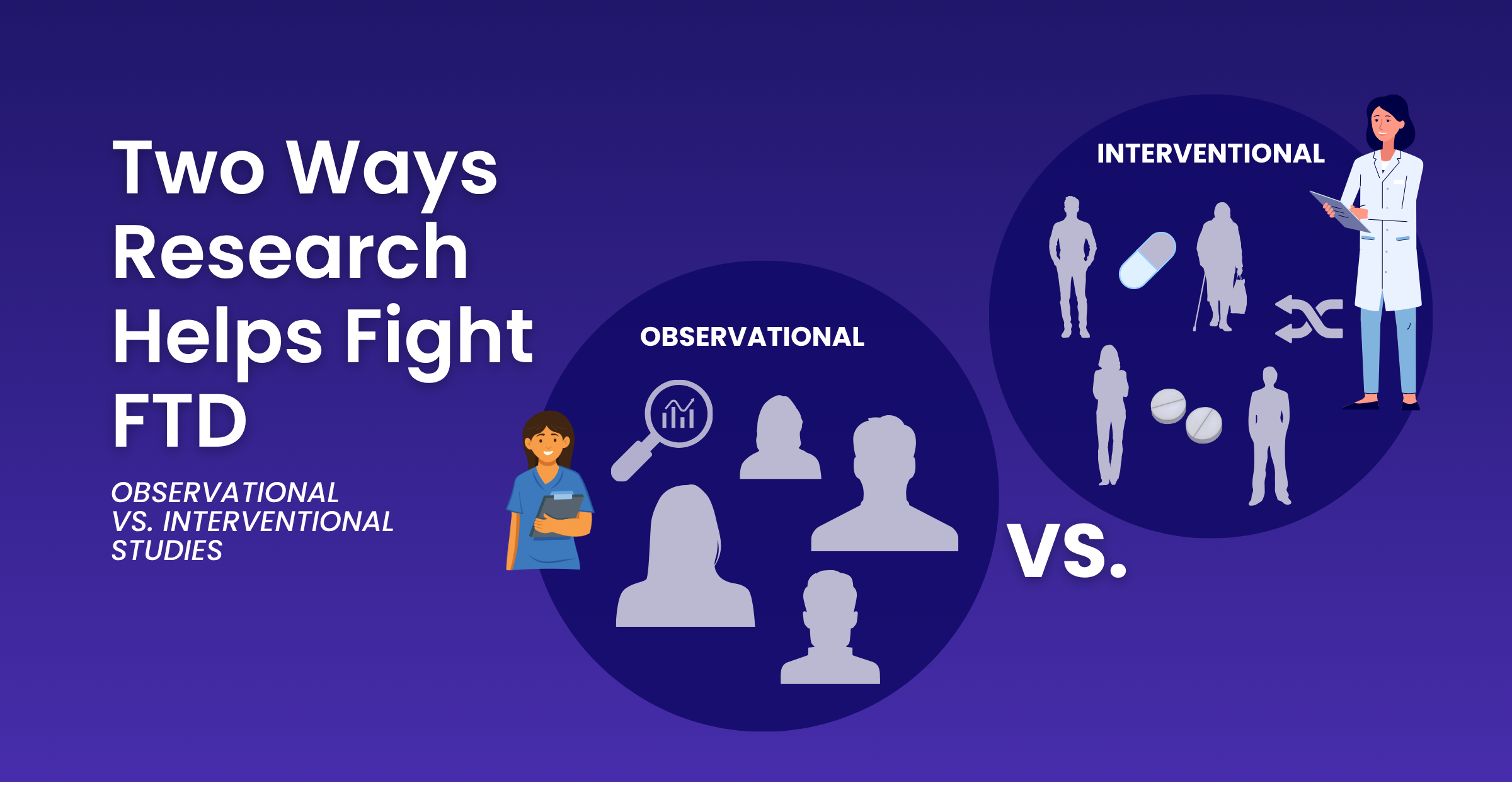
Not all research is the same. Two of the most common types of research on humans are observational studies and interventional studies. Understanding the difference can help you make sense of what you hear and help you decide if participating in a study might be right for you or your loved one.
Think of an observational study like a nature documentary. The researchers are watching and recording what happens, but they are not changing anything.
In an observational study, researchers follow people over time and collect information. They might track:
The key thing to know: the researchers don't give you a drug or ask you to try a new treatment. They are simply learning from your experience.
FTD is a rare disease, and genetic forms of FTD, like progranulin-related FTD (also called GRN-FTD) are even rarer. That means researchers need to gather information from as many people as possible, including people who carry disease-causing changes in FTD-related genes but don't have symptoms yet.
Observational studies help researchers answer questions like:
Joining an observational study usually means coming in for regular visits, such asonce a year over several years. You might have brain scans (like MRIs), blood draws, thinking and memory tests, or fill out questionnaires. There is no experimental drug involved. The main "ask" is your time and your information.
An interventional study,often called a clinical trial,is different. Here, researchers do change something. They test whether an experimental treatment, drug, or other approach can make a difference.
Think of it like a science experiment. One group might get the new experimental treatment, and another group gets a placebo (a "dummy" treatment that looks the same but has no active medicine). Researchers then compare what happens in each group to see if the experimental treatment is effective.
Right now, there is no approved treatment that slows or stops FTD. Clinical trials are how we find one.
For people with progranulin-related FTD, there is real reason for hope. Researchers believe that increasing progranulin levels in the brain could slow, or possibly prevent, the disease. Clinical trials are testing drugs designed to do exactly that.
Every trial is different, but most involve:
Clinical trials have strict rules to keep participants safe. An independent group called an Institutional Review Board (IRB) reviews every study before it begins to make sure it protects the people who join.
Observational and interventional studies are not competing with each other — they work as a team.
Observational research tells scientists:
That information then feeds into clinical trials. Researchers use it to:
For GRN-FTD, large observational studies like ALLFTD and GENFI have been essential in setting the stage for the clinical trials happening today.
This is a deeply personal decision. There is no right or wrong answer. Here are a few things to consider:
For observational studies:
For interventional studies (clinical trials):
Research can feel overwhelming on top of everything else that comes with an FTD diagnosis. But every person who participates, in any type of study,is contributing to something bigger. You are helping scientists understand this disease faster. You are helping build the evidence that will one day lead to a treatment.
Whether you join an observational study, a clinical trial, or simply learn more about the research landscape, you are part of the FTD community's fight forward.
To learn more about available research opportunities click here.
NOTE: This blog post is for educational purposes only and does not constitute medical advice. Always consult with your healthcare provider before making decisions about research participation.


